While Buying Nvidia, Trump Also Praises Jensen Huang — Trump's Latest Financial Disclosure Sparks Controversy
U.S. President Trump's latest disclosed personal investment transactions have attracted market attention. According to financial disclosure documents released on Thursday (October 8), Trump bought up to $1.6 million in NVIDIA stock this August, while simultaneously selling up to $1 million in...
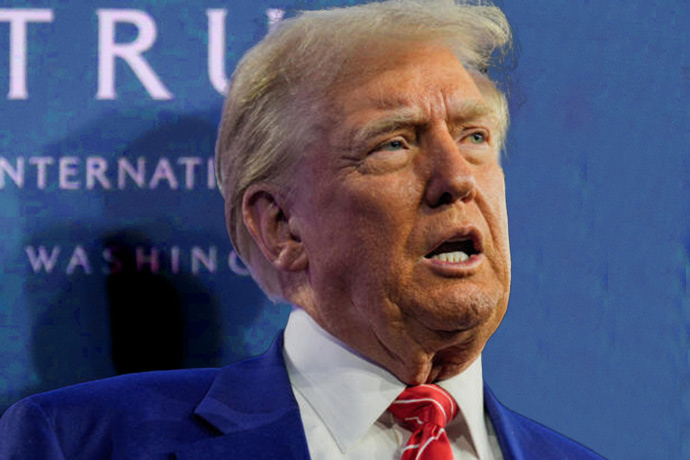
Notably, on the same day these documents were published, Trump was preparing to present Nvidia CEO Jensen Huang with the National Medal of Science. At the same time, the White House is evaluating advanced chip export policies that could directly affect Nvidia's business prospects, raising renewed scrutiny over the relationship between the president's personal investments and government regulatory decisions.
Hundreds of Transactions in a Single Month
According to Reuters, this financial disclosure document was signed by Trump on September 17 and made public on October 8. The documents show that Nvidia stock trades were just one part of hundreds of transactions Trump made in his investment portfolio in August, including both stock purchases and sales.
It should be noted that the US financial disclosure system typically requires filers to report transactions within certain value ranges rather than disclosing the exact amount of each transaction. Therefore, the $1.6 million purchase and $1 million sale both represent the upper limits of the reported value ranges and do not represent actual transaction amounts. Outside parties cannot accurately determine Trump's net purchases of Nvidia stock based solely on this data.
As one of the world's largest technology companies by market capitalization, Nvidia holds a significant position in the AI chip sector, and its business development is closely tied to US government semiconductor industry policies. The Trump administration is currently evaluating advanced chip export rules, and changes to related policies could directly affect Nvidia's market access, product sales, and future revenue expectations.
This background has made Trump's stock trade disclosure particularly noteworthy. Especially as the government has yet to finalize relevant export policies, the presence of Nvidia stock in the president's personal portfolio may further raise questions about the independence of policy decisions.
White House Denies Conflict of Interest
Faced with questions about potential conflicts of interest, the White House has clearly stated that Trump himself does not directly manage the relevant investments.
White House spokesperson Davis Ingle told Reuters that the president's portfolio is independently managed by a third-party financial institution, with investment strategies primarily mirroring widely recognized market indices such as the Schwab 1000 Index.
Ingle emphasized: "All investment decisions are made entirely by independent managers, and there is no conflict of interest."
However, InvestingLive notes that this explanation may still face external scrutiny. Typically, passively tracking index portfolios primarily make adjustments based on changes in index constituents and weights, whereas Trump's disclosed investment portfolio conducted hundreds of transactions within a single month, including both purchases and sales of the same stock.
Additionally, third-party independent management is not entirely the same as a strictly defined blind trust. The latter typically requires that asset owners cannot obtain knowledge of specific holdings or investment decisions, in order to reduce the risk of conflicts between public officials' duties and personal economic interests.
Even if specific transactions are executed by independent managers, as long as the president continues to hold shares in relevant companies, the value of his personal assets may be affected by changes in government policies. However, the available disclosure information cannot prove that Trump directly directed these transactions, nor is it sufficient to establish illegal conduct or actual利益输送 (improper benefit transfer).
Tech Giants' Relationship with the White House in the Spotlight
The timing of this financial disclosure is also noteworthy. On the very day the documents were made public, Trump arranged to present Nvidia CEO Jensen Huang with the National Medal of Science to honor his contributions to science and technology.
The National Medal of Science is the highest honor awarded by the US government for scientific achievement, recognizing individuals who have made outstanding contributions in the fields of physical sciences, biological sciences, mathematics, engineering, and social and behavioral sciences.
In addition to Huang, Trump also planned to present this honor to SpaceX CEO Elon Musk and Google co-founder Sergey Brin on the same day, highlighting the significant position of artificial intelligence, semiconductors, and technology innovation companies in US government industrial policy.
As of Reuters' press time, Nvidia had not immediately responded to requests for comment.
Nvidia Faces New Political Uncertainty
For investors, the direct market impact of this incident may be relatively limited. Compared to Nvidia's massive market capitalization, the scale of stock trades disclosed by Trump is relatively small, and these transactions alone are insufficient to have a significant impact on the company's stock price.
What deserves more attention is the potential policy impact. US government restrictions on advanced semiconductor exports are an important variable determining Nvidia's overseas business prospects. If the White House relaxes relevant export regulations in the future, it could create more sales opportunities for Nvidia; conversely, further tightening of regulations could limit the market space for some of its products.
InvestingLive analysis suggests that given Trump's ownership of Nvidia stock, any future chip policy adjustments benefiting the company may face stricter political scrutiny, and could even trigger Congressional inquiries or legal challenges. This also means that Nvidia and other US semiconductor companies with high dependence on overseas markets, in addition to evaluating fundamental factors such as artificial intelligence demand, corporate capital expenditure, and technological competition, must also pay attention to the uncertainties brought by Washington's policy decisions.
For the market, the key issue is not the amount of Trump's personal transactions, but whether US semiconductor export policies can maintain predictability, and whether political controversy will further affect the operating environment for the global AI chip industry.
Comment (0)
Log in to comment
Please log in to join the conversation with the GVN community.