A Political Gamble That Unexpectedly Failed! $75 Million Poured Into the US Election, But the AI Giant Hit a Wall
# US AI Industry Attempts to Replicate Cryptocurrency Industry's Political Success, But Critics Say Strategy Falls Short According to MarketWatch reporting on Thursday (October 8), a large super PAC established last year had hoped to replicate the political influence that the cryptocurrency...
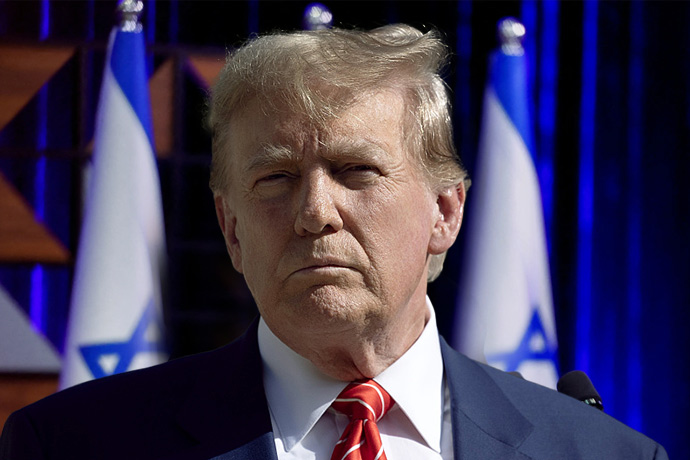
US artificial intelligence industry attempts to replicate the cryptocurrency industry's political success, but critics argue this strategy has not yielded the expected results.
According to MarketWatch Thursday (October 8) reporting, a large super political action committee (Super PAC) established last year had hoped to replicate the political influence that the cryptocurrency industry achieved in the 2024 US elections for the artificial intelligence (AI) industry. However, as opposition sentiment toward AI and data centers intensifies across American society, this ambitious political initiative is facing increasing resistance.
$25 Million Donation Falls Through
The AI Super PAC called "Leading the Future" first encountered a significant financial setback. OpenAI co-founder Greg Brockman and his wife had originally planned to provide a second $25 million donation, but after criticism from OpenAI employees who advocated for stronger industry regulation, the couple canceled the contribution.
Meanwhile, the organization's level of involvement in the November US House of Representatives and Senate midterm elections has been relatively restrained. It primarily supported Democratic and Republican candidates running in districts without intense competition. This contrasts sharply with the strategy of making high-profile investments in party primaries earlier this year. At that time, the organization had deployed funds in an attempt to defeat New York Democrat Alex Bores in a House primary. Bores, a state assemblyman, had gained attention for pushing New York's new AI legislation.
In comparison, the cryptocurrency industry's Super PAC Fairshake had invested funds in the 2024 elections, successfully helping to defeat incumbent Democratic Senator Sherrod Brown of Ohio. Brown had long been skeptical of virtual currencies. Two years ago, Fairshake invested nearly $200 million to support cryptocurrency-friendly candidates and oppose industry critics, ultimately helping the industry achieve a more favorable policy environment in Washington.
Public Opposition Is Changing the Political Landscape
Critics of Leading the Future argue that as opposition to AI and the data centers essential for its development has emerged within both American political parties this year, this Super PAC has been forced to adopt a more cautious strategy than anticipated in the midterm elections.
"I think they are being forced to retreat," said Jeff Hauser, executive director of the left-leaning think tank Revolving Door Project. Hauser told MarketWatch that although Leading the Future has substantial funds, AI has become an increasingly unpopular yet increasingly important political issue, so candidates "don't want their support." He added that Leading the Future initially "clearly intended to copy" Fairshake's political playbook.
Kyle Morse, deputy executive director of the left-leaning watchdog organization Tech Oversight Project, said Leading the Future's strategists "cannot adopt an aggressive strategy as they originally hoped, because fundamentally, the political environment has changed."
"AI and cryptocurrency are completely different things," Morse told MarketWatch. "Most people don't frequently interact with cryptocurrency, but AI has directly impacted people's daily lives." He noted that citizens worry about AI replacing their jobs, fear that energy-intensive data centers will drive up electricity bills, and are also dissatisfied with the government using taxpayer money to subsidize these facilities.
Regarding questions about the canceled $25 million donation, investing in non-competitive districts, and whether it is scaling back political activities, Leading the Future did not directly respond but provided MarketWatch with a general statement.
"The mission of Leading the Future has always been to cultivate a large group of innovation-friendly political leaders who can jointly promote the establishment of a strong and responsible national AI regulatory framework in Congress," the organization stated. "As we look forward to new members entering Congress, celebrate the successful re-election of many incumbents, and continue building a lasting coalition that wants America to maintain its global leadership in AI development, this mission will not change."
Betting on "Safe Win" Candidates
According to data released by Tech Oversight Project as of Thursday, Leading the Future has raised over $75 million, with its Democratic and Republican-affiliated organizations collectively spending approximately $34 million. The Super PAC announced last month that it would support four Democratic House candidates and four Republican Senate candidates in the November 3 general election. However, based on assessments by Cook Political Report analysts, these candidates' districts or races all lack substantial competition.
Chamber of Progress CEO Adam Kovacevich said Leading the Future is not the only AI Super PAC placing funds in non-competitive districts in the final weeks before the election. Chamber of Progress's corporate partners include OpenAI and other major AI companies.
Kovacevich told MarketWatch that Leading the Future "may think it's better to make friends than make enemies." The Chamber of Progress CEO further explained: "The strategy employed in the Bores race was a win-lose model with higher risk but also greater potential rewards. Going all-in to support or oppose a candidate to send a political signal is a very high-stakes gamble." He added: "Therefore, for political action committees, a safer donation strategy is to support incumbents who are very likely to win. This is clearly the more prudent choice."
When asked whether Leading the Future could replicate Fairshake's success, Kovacevich said: "In politics, people always study what methods worked in the past." However, he emphasized that AI supporters face a different situation than the cryptocurrency industry because the public policy discussion around AI "is far less mature" and "the relevant debates primarily revolve around state-level legislation rapidly passed in Democratic-led states." He believes the AI industry faces "a different task," and the maturity of relevant legislation is far below that of the cryptocurrency policy discussions at that time.
Political Lobbying Extends Beyond Elections
Hauser from the Revolving Door Project emphasized that Leading the Future "is only part of a complex, diverse, and well-funded political action system within the AI industry." Major AI companies are also expanding their political influence through traditional lobbying activities and other means that do not require public disclosure.
Last week, major American AI companies participated in a meeting at the White House with President Trump and his staff, ultimately reaching a voluntary agreement to ensure their products are safe. Trump had previously repeatedly opposed calls for broad AI regulation and criticized industry figures who advocated for more safety regulations due to concerns about catastrophic risks.
Trump has also repeatedly promoted his so-called "Ratepayer Protection Pledge," aimed at protecting American consumers from electricity bill increases caused by rising electricity demand from AI data centers. Some analysts predict that substantial US AI policy adjustments may not occur until after the new president is inaugurated in January 2029.
The AI industry has been an important force driving US economic and stock market growth. This year, the Global X Artificial Intelligence & Technology ETF (AIQ), which holds AI-related stocks, has risen 29%, compared to the S&P 500 Index, which tracks large-cap US stocks, rising only 13% over the same period. Although AI continues to be favored in the capital markets, political debates surrounding employment, energy costs, and regulation are bringing new challenges to this rapidly expanding industry.
Comment (0)
Log in to comment
Please log in to join the conversation with the GVN community.